TDEE vs. BMR: What's the Difference?
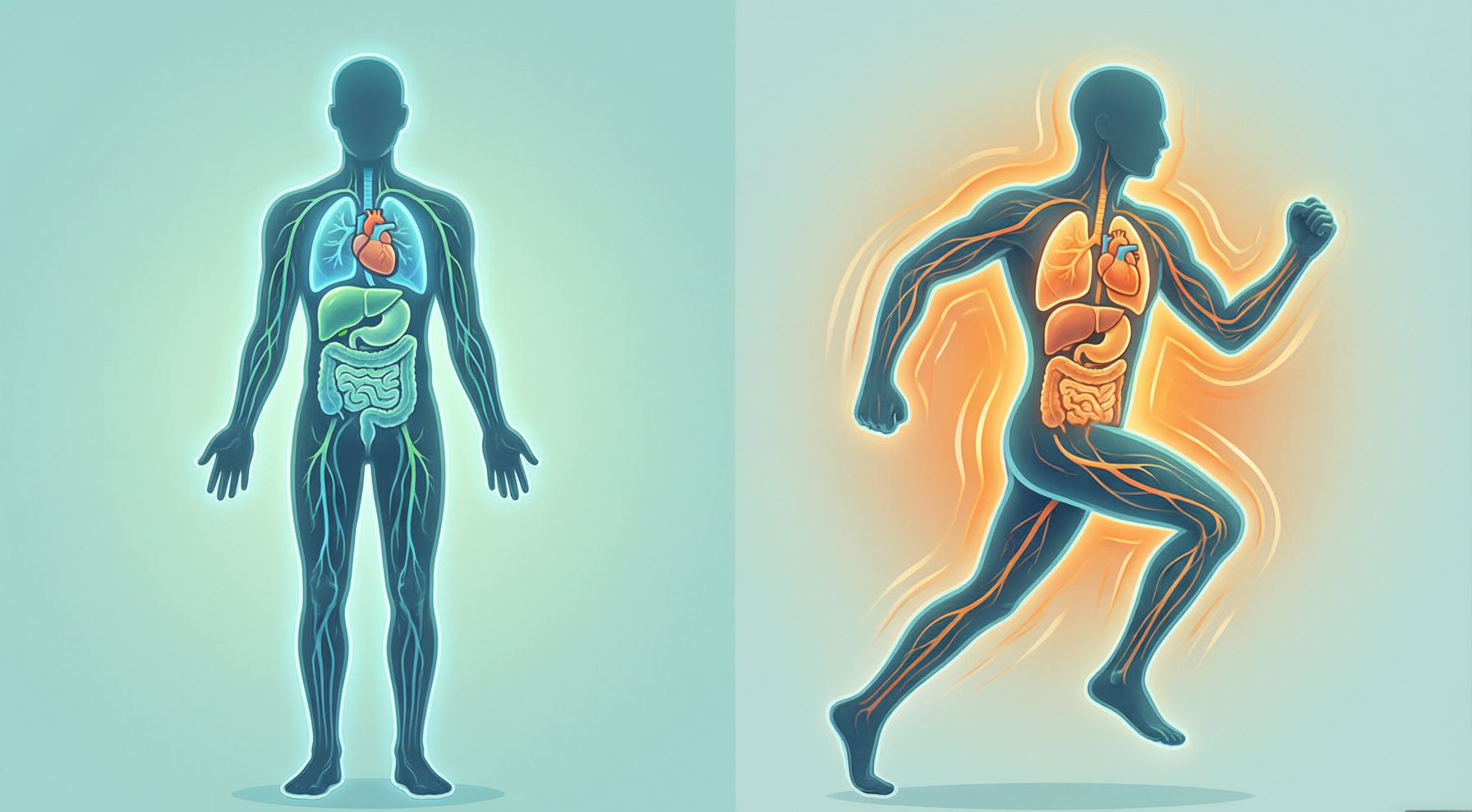
If you have been researching nutrition for fitness, you have almost certainly encountered two acronyms: BMR (Basal Metabolic Rate) and TDEE (Total Daily Energy Expenditure). They sound related, they are related, but they are not interchangeable. Confusing them is one of the most common mistakes people make when setting calorie targets, and it can lead to eating too little (and losing muscle) or too much (and gaining fat).
This article breaks down exactly what each term means, how they relate to each other, and why understanding the distinction is essential for effective diet planning.
What Is BMR (Basal Metabolic Rate)?
BMR is the number of calories your body requires to sustain basic physiological functions while at complete rest. Think of it as the energy cost of keeping you alive if you were to lie in bed all day without moving, eating, or experiencing any thermal stress.
These "basic functions" include:
- Brain activity: Your brain consumes approximately 20% of your resting calories despite being only 2% of your body weight.
- Heart function: Pumping blood through approximately 60,000 miles of blood vessels requires continuous energy.
- Respiration: The mechanical work of breathing accounts for 1-2% of BMR at rest but can rise significantly during exercise.
- Cell production and repair: Protein synthesis, DNA replication, and immune function all require energy even at rest.
- Temperature regulation: Maintaining a core body temperature of 98.6°F (37°C) requires energy, especially in cold environments.
- Liver and kidney function: These organs are metabolically expensive, with the liver alone accounting for roughly 20-25% of resting energy expenditure.
For most adults, BMR accounts for 60-75% of total daily energy expenditure. A typical BMR ranges from 1,200 to 2,000 calories per day, depending on body size, composition, age, and sex. You can estimate yours using our BMR Calculator.
What Determines Your BMR?
The primary determinants of BMR are:
- Lean body mass: Muscle tissue is more metabolically active than fat tissue. Every pound of muscle burns approximately 6 calories per day at rest, compared to about 2 calories per pound of fat. This is why muscular individuals have higher BMRs.
- Body surface area: Larger bodies lose more heat and require more energy to maintain temperature. This is why taller people tend to have higher BMRs even at the same weight.
- Age: BMR declines by approximately 1-2% per decade after age 20, primarily due to loss of lean mass and hormonal changes.
- Sex: Men typically have 5-10% higher BMRs than women of the same age and weight, due to greater muscle mass and lower essential fat percentage.
- Genetics: Research suggests heritability of BMR is approximately 20%, meaning some people are naturally "faster burners" at rest.
What Is TDEE (Total Daily Energy Expenditure)?
TDEE is the total number of calories you burn in a full day, encompassing all forms of energy expenditure. It is the number you need to match with food intake to maintain your current weight.
TDEE is the sum of four components:
| Component | Abbreviation | % of TDEE | Description |
|---|---|---|---|
| Basal Metabolic Rate | BMR | 60-75% | Energy for basic life functions at rest |
| Thermic Effect of Food | TEF | 8-15% | Energy required to digest, absorb, and store food |
| Exercise Activity Thermogenesis | EAT | 5-10% | Calories burned during structured exercise |
| Non-Exercise Activity Thermogenesis | NEAT | 6-50% | Calories burned through all other movement (fidgeting, walking, standing, etc.) |
The Four Components of TDEE Explained
1. Basal Metabolic Rate (BMR)
As described above, this is the foundation of your energy expenditure. It is the largest single component and the most stable from day to day. BMR is what prediction equations like Mifflin-St Jeor, Harris-Benedict, and Katch-McArdle actually calculate. To get from BMR to TDEE, you multiply by an activity factor.
2. Thermic Effect of Food (TEF)
Every time you eat, your body expends energy to break down food, absorb nutrients, and store them. This process generates heat and burns calories. The thermic effect varies by macronutrient:
- Protein: 20-30% of its calories are burned during digestion (this is why high-protein diets are popular for fat loss)
- Carbohydrates: 5-10% thermic effect
- Fat: 0-3% thermic effect
For a mixed diet, TEF averages about 10% of total caloric intake. If you eat 2,500 calories per day, approximately 250 calories are burned just digesting that food. TEF is relatively stable and predictable, making it the least variable component of TDEE.
3. Exercise Activity Thermogenesis (EAT)
This is the calories burned during deliberate, structured exercise: running, weightlifting, cycling, swimming, etc. For most people, EAT accounts for only 5-10% of TDEE, even among regular exercisers.
A typical 45-minute weight training session burns approximately 200-300 calories. A 30-minute run at moderate pace burns about 300-400 calories. These numbers are much smaller than most people assume, which is why exercise alone is a poor strategy for weight loss without dietary changes.
Important Context
EAT is the smallest and most variable component of TDEE for most people. A single gym session might burn 250 calories, but if you sit for the remaining 15 hours of your waking day, your total energy expenditure from exercise is a small fraction of your total. This is why NEAT matters more for long-term energy management.
4. Non-Exercise Activity Thermogenesis (NEAT)
NEAT is the energy expended for everything that is not sleeping, eating, or sports-like exercise. It includes:
- Walking to work, around the office, or to the kitchen
- Fidgeting, tapping your foot, or shifting posture
- Standing vs. sitting
- Gesturing during conversation
- Household chores, cooking, and cleaning
- Shopping and running errands on foot
NEAT is the most variable component of TDEE. Research by Levine et al. (1999) at the Mayo Clinic found that NEAT could vary by up to 2,000 calories per day between individuals of similar size. Even within the same person, NEAT can fluctuate by 400-800 calories between a busy day and a lazy day.
This enormous variability is why two people with the same BMR, the same exercise routine, and the same diet can have meaningfully different TDEEs. The person who paces during phone calls, takes the stairs, and walks to lunch burns significantly more than the person who sits still all day.
Why the BMR vs. TDEE Distinction Matters
For Weight Loss
If you create a caloric deficit based on your BMR rather than your TDEE, you will underestimate how much you can eat. For example:
- Person A has a BMR of 1,600 kcal and a TDEE of 2,400 kcal (sedentary multiplier of 1.5).
- If they eat at their BMR (1,600 kcal), they create an 800 kcal deficit. This is aggressive and may trigger metabolic adaptation.
- If they eat at 1,900-2,100 kcal (a 300-500 kcal deficit below TDEE), they lose weight at a sustainable rate without excessive metabolic stress.
For Weight Gain (Bulking)
If you base your surplus on BMR instead of TDEE, you will massively overeat. A 500-calorie surplus above BMR (1,600 + 500 = 2,100) is still below TDEE (2,400) for our example person. They would actually lose weight, not gain it. For effective bulking, you need to add your surplus to your TDEE, not your BMR.
See our guide to bulking vs. cutting for detailed calorie targets for each goal.
Example Calculations: BMR vs. TDEE
Let's work through a concrete example to illustrate the gap between BMR and TDEE.
Subject: Male, 30 years old, 180 lbs (81.6 kg), 5'10" (178 cm), moderately active.
Step 1: Calculate BMR (Mifflin-St Jeor)
BMR = (10 × weight in kg) + (6.25 × height in cm) - (5 × age) + 5
BMR = (10 × 81.6) + (6.25 × 178) - (5 × 30) + 5
BMR = 816 + 1,112.5 - 150 + 5 = 1,784 kcal/day
Step 2: Apply Activity Multiplier to Get TDEE
| Activity Level | Multiplier | TDEE | Daily Gap from BMR |
|---|---|---|---|
| Sedentary (little or no exercise) | 1.2 | 2,141 kcal | +357 kcal |
| Lightly active (1-3 days/week) | 1.375 | 2,453 kcal | +669 kcal |
| Moderately active (3-5 days/week) | 1.55 | 2,765 kcal | +981 kcal |
| Very active (6-7 days/week) | 1.725 | 3,077 kcal | +1,293 kcal |
| Extra active (athlete + physical job) | 1.9 | 3,390 kcal | +1,606 kcal |
As you can see, the gap between BMR and TDEE ranges from 357 to 1,606 calories per day depending on activity level. That is a massive difference, and it illustrates why using BMR alone for diet planning would lead to significant errors.
Try It Yourself
Use our TDEE Calculator to see your own BMR and TDEE side by side. The calculator also shows calorie targets for cutting and bulking based on your TDEE, not your BMR.
How to Use BMR and TDEE Together
Understanding both numbers gives you a more complete picture of your energy needs:
- BMR is your floor. You should generally not eat below your BMR for extended periods. Doing so can trigger metabolic adaptation, muscle loss, and hormonal disruption.
- TDEE is your maintenance target. Eating at your TDEE keeps your weight stable. This is the number to use for setting cutting or bulking targets.
- The gap between them represents your activity calories. If this gap is small (sedentary), you have less room to maneuver with diet. If it is large (very active), you have more flexibility.
Practical Recommendations
- Calculate both BMR and TDEE. Our TDEE Calculator provides both numbers automatically.
- Set your target relative to TDEE. For fat loss: TDEE minus 300-500 kcal. For muscle gain: TDEE plus 200-350 kcal.
- Verify your target never drops below BMR. If your cutting target is below your BMR, your deficit is too aggressive. Reduce the deficit or increase activity instead.
- Reassess every 2-3 weeks. Track your weight and adjust. If weight is not moving in the expected direction, your actual TDEE may differ from the estimate. See our accuracy guide for how to validate empirically.
Related Topics
- How to Calculate TDEE Manually — Step-by-step walkthrough of the equations
- Comparison of BMR Formulas — Which equation should you use?
- Activity Level Guidelines — How to choose the right multiplier
- Metabolic Adaptation — What happens when you diet for too long
- Bulking vs. Cutting — Setting calorie targets for your goals
Frequently Asked Questions
BMR (Basal Metabolic Rate) is the number of calories your body burns at complete rest to maintain basic life functions like breathing, circulation, and cell production. TDEE (Total Daily Energy Expenditure) is the total number of calories you burn in a day, including BMR plus the thermic effect of food (TEF), exercise activity thermogenesis (EAT), and non-exercise activity thermogenesis (NEAT). TDEE is typically 1.2 to 1.9 times higher than BMR depending on activity level.
You should never regularly eat below your BMR, as this can trigger metabolic adaptation and muscle loss. For weight maintenance, eat at your TDEE. For fat loss, create a moderate deficit of 300-500 calories below your TDEE (not below your BMR). For muscle gain, add 200-350 calories above your TDEE. Use our TDEE Calculator to find your numbers.
TDEE is typically 20-90% higher than BMR for most people. A sedentary person's TDEE is about 1.2 times their BMR (20% higher), while a very active person's TDEE can be 1.9 times their BMR (90% higher). The gap between BMR and TDEE represents calories burned through digestion, daily movement, and structured exercise.
Using BMR alone for diet planning is incomplete because it ignores the 400-1,000+ calories you burn daily through activity and digestion. Some diet approaches use BMR as a 'floor' (never eat below this) and then add exercise calories separately. However, the more practical approach is to calculate your TDEE directly and set your targets from there. Our TDEE Calculator handles this automatically.